
International Experience and Discussions among Latvian Higher Education Institutions on the Development of Internal Quality Assurance Systems
Back to news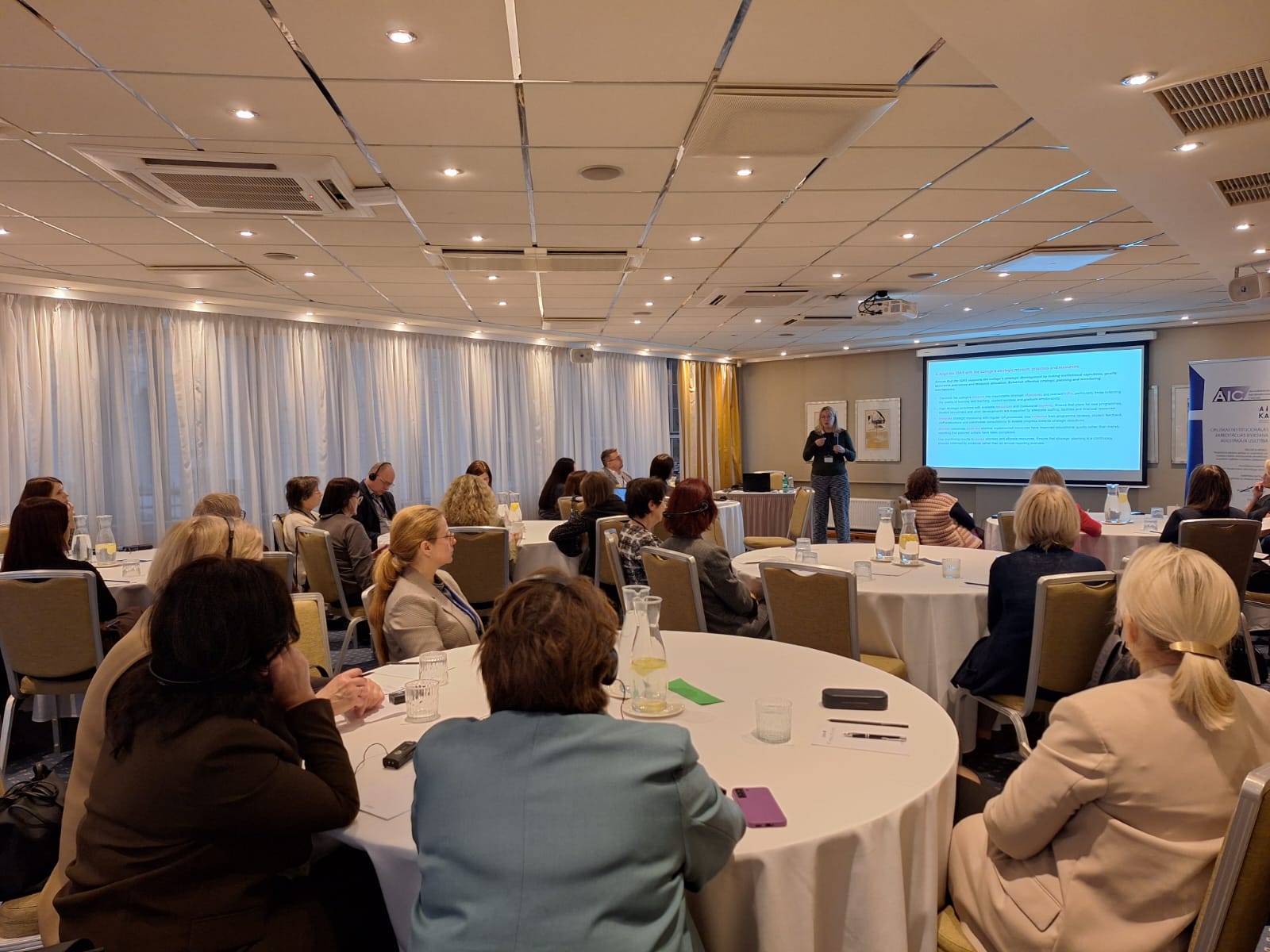
On 12 and 13 November, the second seminars in the series of workshops organised by AIKA, entitled “Internal Quality Assurance System as a Strategic Tool for Institutional Development: Assessment, Priorities and Targeted Improvements”, took place, bringing together representatives of higher education institutions and colleges in separate sessions. This time, the discussions focused on international experience and how it can be applied to the further development of internal quality assurance systems in Latvian higher education institutions, with particular regard to the transition to institutional accreditation.
Two international experts shared their experience and perspectives during the seminars. Ana Tecilazić, Vice-Rector for Quality at Algebra Bernays University in Croatia, addressed institutional quality assurance frameworks, their proportionality, strategic development and quality assurance governance. Meanwhile, Dan Derricott, Director of Education Operations at the University of Warwick (United Kingdom), highlighted evidence-based enhancement, the student-centred approach, stakeholder engagement, the integrated use of data and the assessment of the impact of quality assurance.
The experts’ presentations provided a basis for discussions on how to develop an internal quality assurance system that not only demonstrates compliance with established requirements but also helps an institution understand its performance, identify development priorities and make evidence-informed decisions.
Discussions among higher education institutions placed particular emphasis on establishing a coherent and continuous approach to quality management by linking the institution’s strategic objectives, allocation of responsibilities, performance indicators, data analysis and feedback. Participants stressed that quality policy and strategy should not merely constitute a framework set out in documents, but should provide a practical basis for everyday decision-making and institutional activities. It is also essential to ensure that the views of students, graduates, employers and other stakeholders are not simply collected but are also used to implement concrete improvements. The discussions also addressed the assignment of process owners and responsibilities, the selection of meaningful performance indicators and the strengthening of quality culture at all levels of the institution.
Discussions among colleges, in turn, placed particular emphasis on the proportionality of quality assurance systems. Participants stressed that a system should reflect the specific nature and scale of a college’s operations and the resources available to it, while ensuring its effectiveness. Quality assurance should be organically integrated into everyday management processes rather than developed as a separate system of documents and reporting. Discussions also covered the identification of performance indicators appropriate for colleges, the use of data and employer feedback, as well as issues relating to research, internationalisation and the continuity of institutional operations in the context of institutional accreditation.
A common conclusion emerged from the discussions at both seminars: the value of a quality assurance system is determined not by the volume of procedures or documents it contains, but by the extent to which it helps an institution use information, assess its achievements, make decisions and implement improvements. At the same time, it is essential to maintain a balance between quality requirements, the specific characteristics of an institution and the resources at its disposal.
The insights gained during the seminars and the experience shared by the international experts will be used to develop practical recommendations for Latvian higher education institutions and colleges on enhancing their internal quality assurance systems. The aim is to promote the development of systems that become genuine instruments for strategic institutional management, decision-making and strengthening quality culture, including in preparation for institutional accreditation.
The seminar series is organised within the framework of the ESF project “Implementation of Cyclical Institutional Accreditation in Higher Education”.
Links to presentations:
12 November
Link to Ana Tecilazić’s presentation
13 November
Link to Ana Tecilazić’s presentation

